

Empowering Tomorrow’s Venezuelan Young about Quantum Computing
Beneficiary Community:
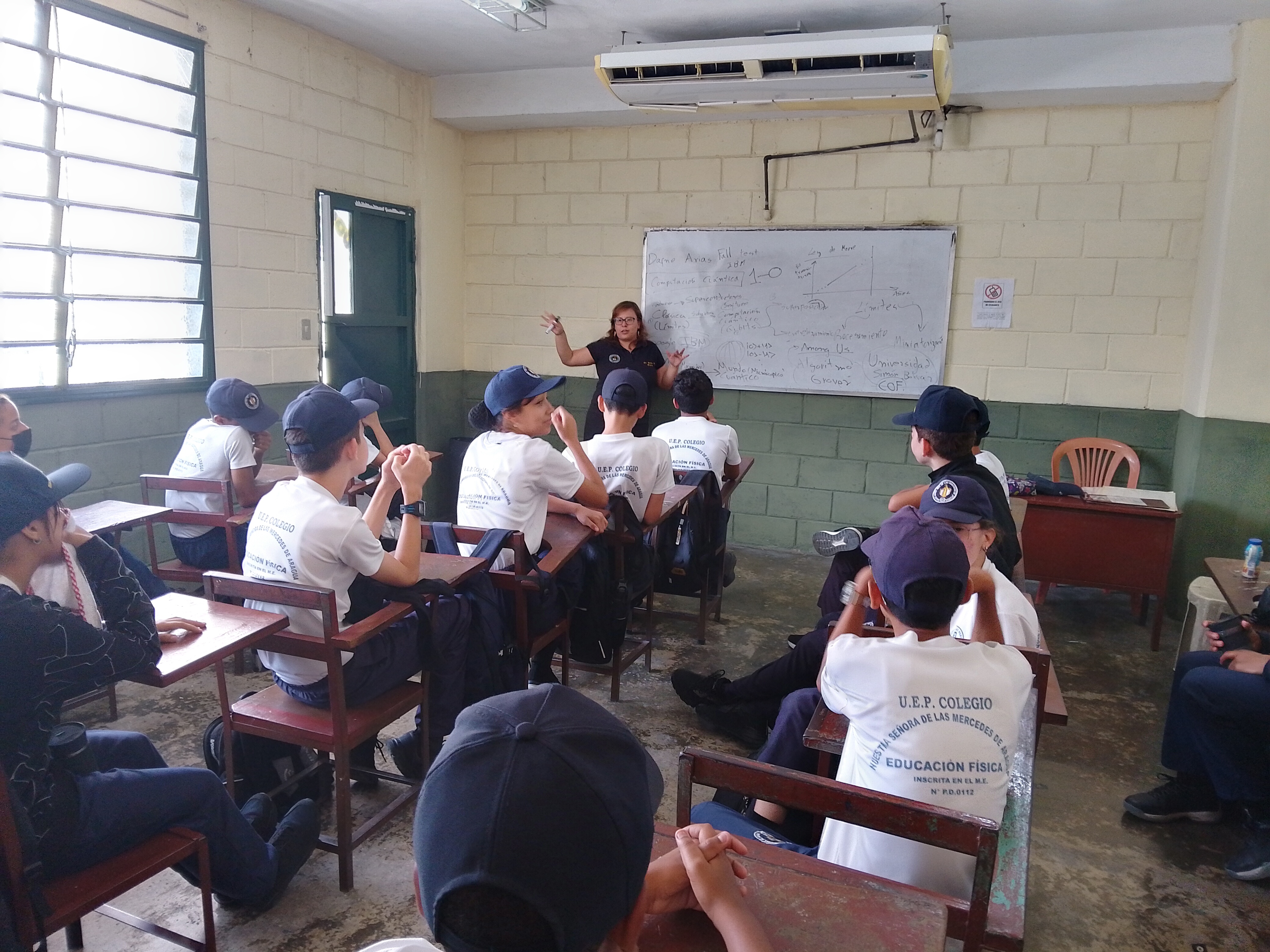
Comprised of middle school students, specifically, from the third year in Venezuela.
Community Characteristics:
The audience consisted of young individuals aged 14-15, of both genders. The lecture was attended by 23 students and their physics teacher, with 10 girls and 13 boys in attendance.
<Quantum|Chamitas> has successfully engaged and educated third-year students from U.E.P.C Nuestra Señora de las Mercedes de Aragua. The primary goal of this lecture was to ensure that complex scientific knowledge was made accessible to non-expert audiences in a face-to-face setting, while sparking curiosity and understanding about quantum computing.
Summary of the activity:
The mission centered around the development and presentation of key quantum computing concepts, with a particular focus on qubits, superposition, and entanglement. Through an engaging and informative lecture, the project aimed to ensure that this young audience, with a general understanding of the differences between classical and quantum mechanics, could gain a foundational knowledge on quantum computing topics and their applications.
It’s worth noting that, although the students had a general understanding of the distinction between classical and quantum mechanics, they were entirely unfamiliar with quantum computing, qubits, and entanglement.
Discussion:
From the beginning of the lecture, the group was notably receptive and calm, with several students actively participating and providing comments throughout the presentation. This proactive attitude from some students reinforces the notion that a well-structured presentation tailored to their context can create a conducive environment for learning and interaction.
As mentioned in previous activities, the implementation of a brief break of less than 5 minutes between the lecture and the question session has proven to be an effective strategy. This short interlude allows students to process the information, relax, and gear up for the next phase of the activity. This seemingly simple pause has significantly contributed to fostering a more comfortable environment, leading to increased engagement during the question session.
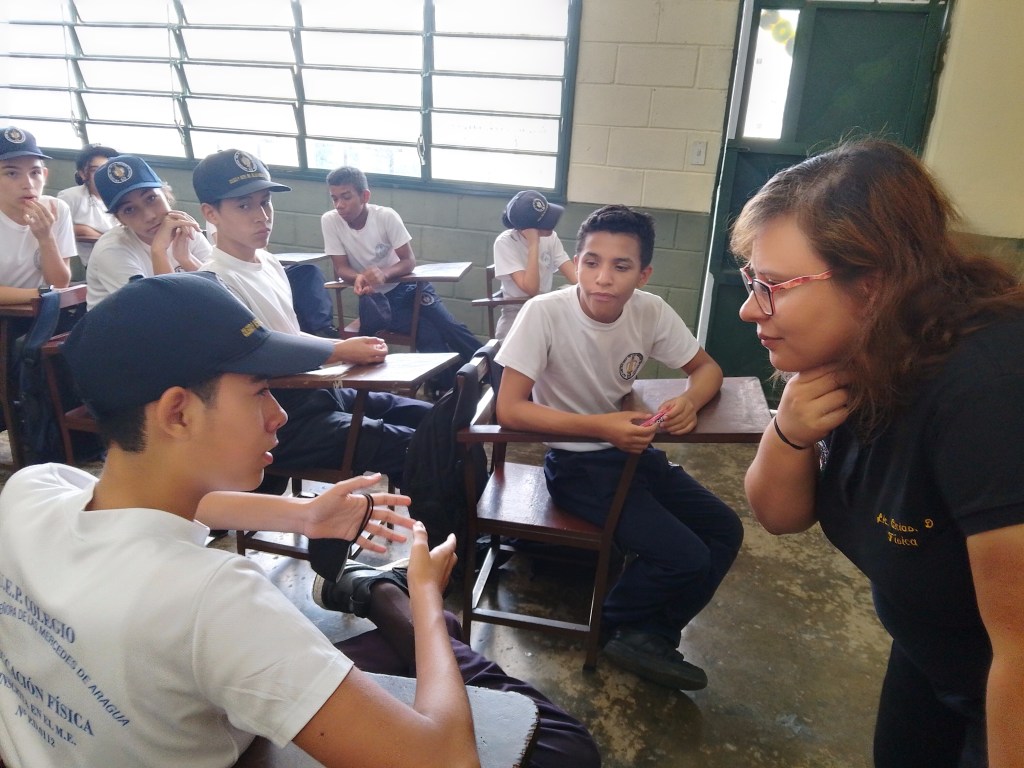
However, one aspect that particularly stood out was the participation dynamics between genders. Throughout the lecture, and especially during the question session, it was observed that active participation predominantly came from the male students. Despite efforts to motivate and encourage the female students to engage, their involvement was noticeably less compared to their male peers and the female students from the fourth-year group. It’s important to note that this is a qualitative observation, and to fully understand the reasons behind this response, a more detailed quantitative analysis would be required.
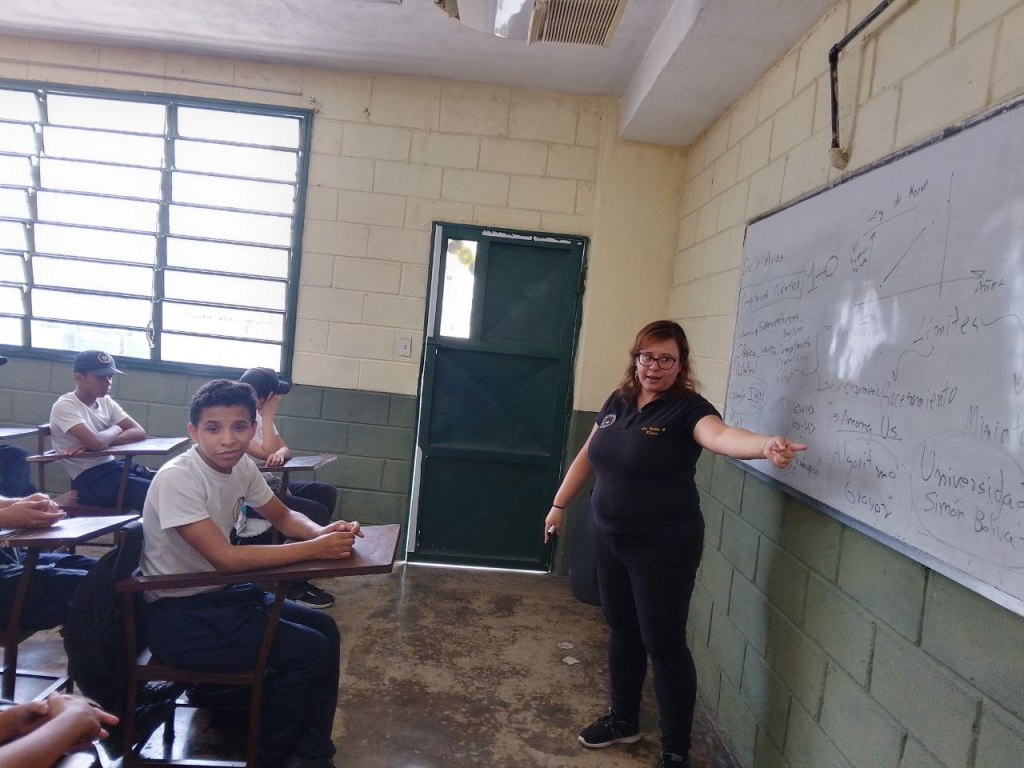
However, there was a moment when the female students displayed a heightened interest and became more participative: when the Grover Algorithm was introduced using the video game “Among Us” as an example. This underscores the importance of using relevant and contemporary examples and analogies to capture students’ attention. The group also showed curiosity and interest in the video game “Quantum Odyssey.“
The questions posed by the students primarily focused on the different types of qubits and the opportunities to study and work in the field of quantum computing in Venezuela. These inquiries reflect a genuine interest in the subject and the aspiration of many young individuals to explore and contribute to this emerging field within the Venezuelan context.
Eventualities:
For this second activity with the third-year group, everything proceeded quite orderly and without significant incidents. However, it’s worth noting a minor logistical detail: the lecture began with a slight delay of approximately 5 minutes from the scheduled time. The reason for this brief delay was that the presenter needed to purchase additional candies and sweets for the break between the lecture and the question session. While this detail might seem trivial, it underscores the importance of detailed planning and anticipating the needs of the event. It would be beneficial, in future instances, to have precise information regarding the average number of students in each class.
Recommendations:
Given the qualitative observation that female students participated considerably less in the lecture compared to their male counterparts, it would be valuable to develop a quantitative method to assess the reasons for the disparity in participation between boys and girls. This could include anonymous post-lecture surveys, where students are asked about their comfort level in participating, perceived barriers, and any suggestions to enhance interaction.
The use of the video game “Among Us” as an analogy to explain a complex concept proved effective in capturing the attention of the female students. Therefore, it would be beneficial to research and employ more examples and analogies that are culturally relevant and current for the target demographic.
Conclusion:
The initiative continues to prove itself as a valuable tool for introducing young students to the captivating world of quantum computing. Through lectures tailored to their level and context, it has succeeded in sparking curiosity and providing a solid foundation in concepts that might initially seem out of reach.
The receptiveness and active participation of the students are indicative of the positive impact these lectures have. However, it’s essential to recognize and address the gender participation dynamics to ensure an equitable educational experience for all.
Acknowledgments:
<Quantum|Chamitas> extend its heartfelt thanks to the individuals who played a pivotal role in making this face-to-face activity a success:
Prof. Ana Mercedes Ocha (School Director)
Prof. Blanca Valderrama (Coordinator)
Prof. Maryit Flores (Coordinator of the Department of Basic, Middle and Diversified Education)
Prof. Rubén Briceño (Physics and Mathematics Teacher)
And, as usual, heartfelt gratitude to the Womanium organization for their unwavering support.
Your support and dedication were instrumental in empowering young minds with the wonders of quantum computing. #ThankYou.
 Dr. Carolina Perdomo