

Empowering Tomorrow’s Venezuelan Young about Quantum Computing

Beneficiary Community:
Comprised of senior high schoolers, specifically, from the fifth year in Venezuela (final year of high school/secondary education).
Community Characteristics:
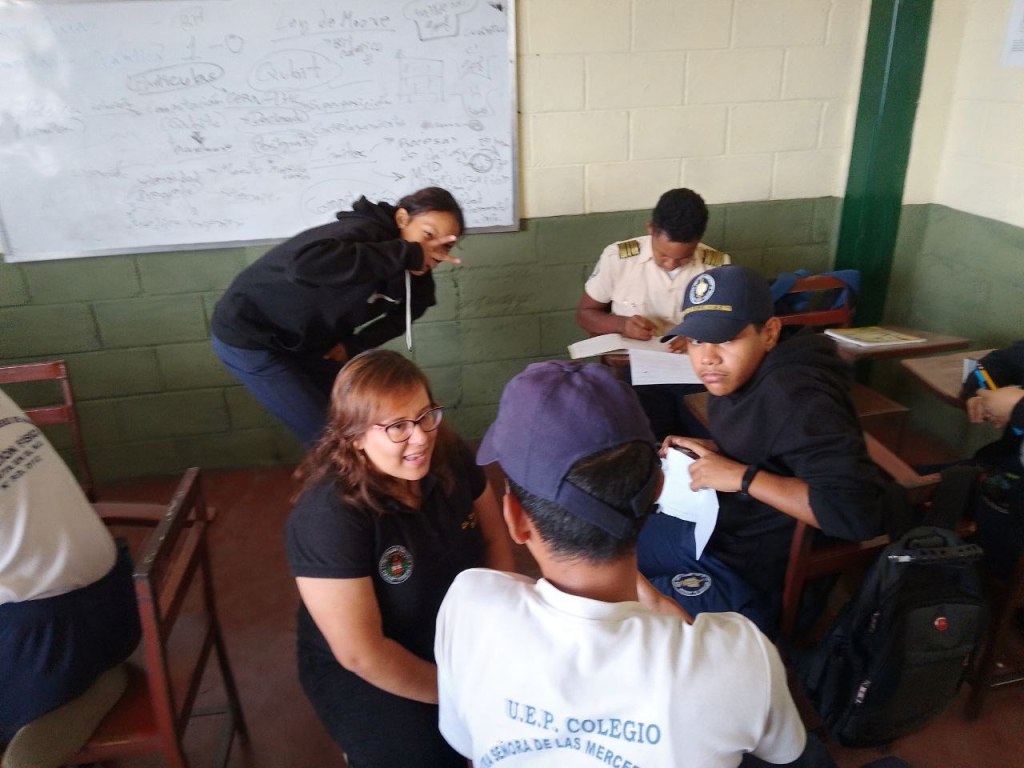
The audience consisted of young individuals aged 16-17, of both genders. The lecture was attended by 29 students and their chemistry teacher, with 9 girls and 20 boys in attendance.
<Quantum|Chamitas> has successfully engaged and educated fifth-year students from U.E.P.C Nuestra Señora de las Mercedes de Aragua. The primary aim of this presentation was to ensure that complex scientific topics related to quantum computing were presented in an understandable manner in a face-to-face format, while simultaneously fostering interest and understanding in the field.
Summary of the activity:
The central purpose was the development and presentation of essential concepts in quantum computing, with a particular emphasis on qubits, superposition, and entanglement. Through an enriching and educational presentation, the project aimed to ensure that these fifth-year students, who initially had limited knowledge on the subject, solidified their understanding of these advanced concepts. As a result, the students from U.E.P.C Nuestra Señora de las Mercedes de Aragua gained a clear insight into these captivating topics.
Like other groups, it’s important to note that while some students already had a basic understanding of topics like the differences between classical and quantum mechanics and were familiar with Schrödinger’s cat experiment, they lacked knowledge about quantum computing, qubits, entanglement, and the companies leading the way in these technologies.
This group displayed a particular interest in job opportunities related to quantum computing. This interaction with the fifth-year students highlighted the importance of senior high school students being in contact with professionals who introduce them to new career horizons and pathways.
Discussion:
The experience with the fifth-year group provided a unique and insightful perspective on the dynamics of teaching and learning within the context of secondary education. While this group posed specific challenges in terms of attention, it’s essential to approach these challenges with empathy and understanding, recognizing the various circumstances and motivations that might influence student behavior.
It was evident that, during the lecture, the group’s attention varied. However, the strategy of implementing a brief break between the presentation and the question session proved effective in rejuvenating the students’ interest and participation. This pause allowed some students to process the information, relax, and prepare for the next phase of the activity.
What was particularly intriguing was the focus of the students’ inquiries. While quantum computing was the central topic, their interest leaned more towards job opportunities in the field and the professional landscape in Venezuela. Questions about the types of qubits, hardware limitations, the advantages of adding more qubits, and error correction (especially the latter, which wasn’t covered in the lecture) reflect a curiosity and a desire to understand not just the theory but also the practical application and implications of quantum computing.
Furthermore, the interest shown towards the presenter’s professional journey, including questions about the nature of a doctorate and the specific contributions of her thesis (topics not covered in the lecture), underscores the need for students to be in touch with professionals who can provide a clear insight into career possibilities and the academic path.
Similar to the third-year group, a gender dynamic in participation was observed. While the girls did engage, especially in relation to the presenter’s academic journey, their participation was less pronounced compared to the boys. This observation underscores the importance of continuing to seek strategies to foster equitable participation and ensure that all students feel comfortable and motivated to actively engage.
In summary, this experience with the fifth-year group has been enlightening and offers valuable lessons on how to adapt and enhance future lectures to meet the specific needs and curiosities of the students.
Eventualities:
Engaging with the fifth-year group presented unique challenges that call for detailed and constructive reflection. It’s crucial to approach these situations with objectivity and professionalism, always seeking solutions and learnings that can enhance future interactions.
From the outset, this group proved to be the most challenging to manage. Throughout the lecture, multiple calls for attention were necessary to maintain order and focus. These calls came not only from the presenter but also from the overseeing teacher and, in some instances, from the students themselves. This latter fact suggests an internal dynamic where some students were genuinely interested in the content, while others appeared less engaged.
The group’s size, being the largest to date, also posed logistical challenges. An intriguing qualitative observation was that those students situated closer to the board seemed more engaged and participative than those at the back. This spatial arrangement might have influenced the attention and participation dynamic. It’s possible that, with a more suitable seating arrangement, the experience might have been different. Despite the presenter’s efforts to project her voice and ensure everyone could hear, students at the far end of the classroom showed waning interest as the lecture progressed.
Recommendations:
First and foremost, it’s vital to optimize the students’ seating arrangement in the classroom to maximize their attention and participation. This might mean reconfiguring the space so students are closer to the presenter or considering sessions with smaller groups.
It’s worth noting that, following the lecture, a conversation was held with the school’s principal. She displayed an extremely receptive and positive attitude towards the idea of introducing senior high school students to a variety of professionals from different fields, not just physics.
Despite the socioeconomic challenges Venezuela faces, its higher education remains recognized and respected in the Latin American context. It’s clear that high school students have a burning desire to pursue further academic achievements, and institutions should support them on this journey.
Venezuela is home to several prestigious universities that offer academic programs aligned with both the nation’s and the world’s future economic needs. Therefore, it’s vital to introduce students to these opportunities, allowing them to envision and explore diverse career paths.
Conclusion:
<Quantum|Chamitas> stands out as an effective means to introduce students to the intriguing world of quantum computing.
Engaging with the fifth-year group proved to be an eye-opening experience, providing crucial insights for refining and optimizing future presentations. It’s imperative to continue developing approaches that foster inclusive interaction, ensuring every student feels engaged and encouraged to actively participate.
Furthermore, the students’ pronounced interest in career prospects and the presenter’s professional journey underscores the importance of connecting young individuals with experts who can provide a comprehensive overview of career opportunities and academic progression in Venezuela.
Acknowledgments:
<Quantum|Chamitas> extend its heartfelt thanks to the individuals who played a pivotal role in making this face-to-face activity a success:
Prof. Ana Mercedes Ocha (School Director)
Prof. Blanca Valderrama (Coordinator)
Prof. Maryit Flores (Coordinator of the Department of Basic, Middle and Diversified Education)
Prof. Nérida Jiménez (Professor of Chemistry)
And, as usual, heartfelt gratitude to the Womanium organization for their unwavering support.
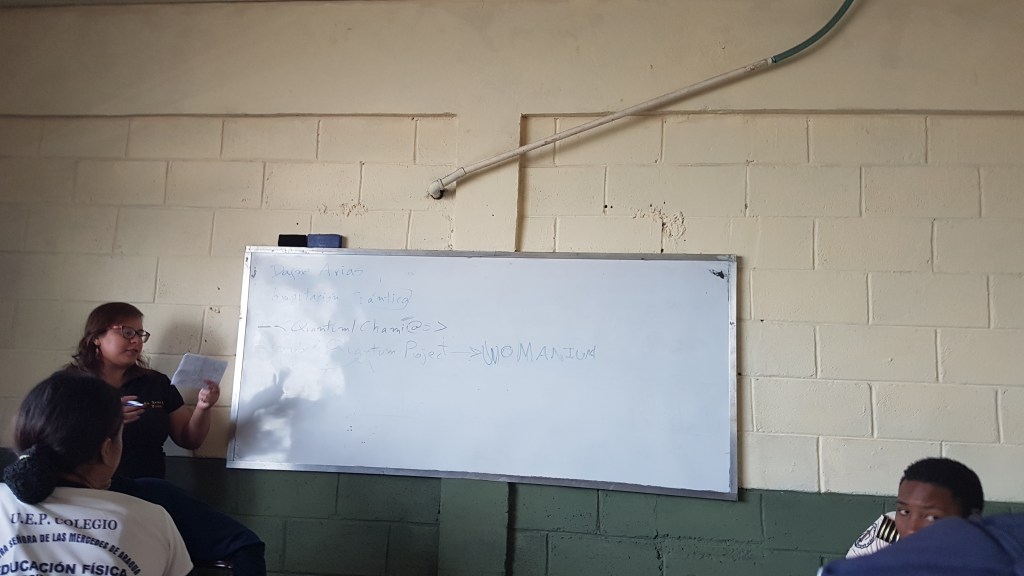
Your support and dedication were instrumental in empowering young minds with the wonders of quantum computing. #ThankYou.
 Dr. Carolina Perdomo