

Empowering Tomorrow’s Venezuelan Young about Quantum Computing
Beneficiary Community:
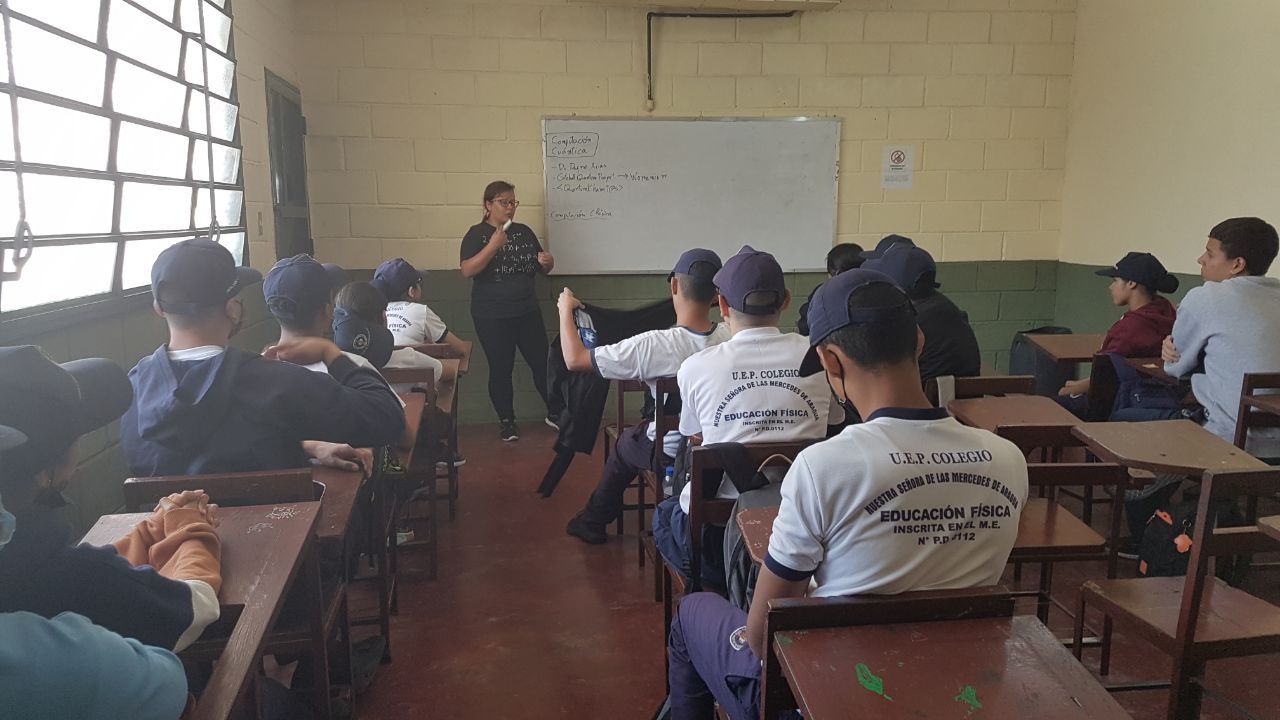
The beneficiary community for this talk comprised high school students between the ages of 15 and 16, corresponding to the first year of high school in Venezuela (fourth year).
Community Characteristics:
The audience consisted of young people aged 15-16, of both genders. Fourteen students and their physics teacher attended the lecture, with five girls and nine boys in attendance.
<Quantum|Chamitas> has successfully engaged and educated students between the ages of 15 and 16 from U.E.P.C Nuestra Señora de las Mercedes de Aragua. The primary goal of this first talk was to make complex scientific knowledge accessible to non-expert audiences in a face-to-face activity, while sparking curiosity and understanding of quantum computing.
Summary of the activity:
The mission revolved around the development and presentation of key quantum computing concepts, with a particular focus on qubits, superposition, and entanglement. Through an engaging and informative lecture, the project aimed to ensure that this young audience, largely unfamiliar with the subject, could acquire a solid foundation in these complex topics. At the end of this endeavor, the students of U.E.P.C Nuestra Señora de las Mercedes de Aragua successfully absorbed fundamental insights into these fascinating areas of science.
Nevertheless, this endeavor highlighted that some students already had a basic understanding of concepts like the differences between classical and quantum mechanics, as well as Schrödinger’s cat experiment. However, they were entirely unaware of quantum computing, qubits, entanglement, and the companies employing these technologies.
In my pursuit to make a lasting impact, it is plan to repeat this talk for high school seniors and middle school students. This first interaction allowed to qualitatively evaluate the learning process, identifying the difficulties that students might face when grappling with these complex ideas.
Discussion:
The project approach was met with initial skepticism, as students began with varying degrees of interest. However, as the lecture progressed, curiosity blossomed, and participation increased. A pivotal moment in reigniting their enthusiasm came during a short break, where the students were provided with a snack, which further piqued their interest.
Interestingly, it was the female students who demonstrated exceptional receptivity from the outset, eagerly engaging in the discussion. Their thought-provoking questions included inquiries about the limitations of quantum computers, avenues for studying this field in Venezuela, and the prerequisites for pursuing a career in quantum computing. Additionally, both guys and girls expressed a keen interest in acquiring educational tools like the Quantum Odyssey game to delve deeper into the subject matter.
The post-lecture informal discussions were marked by a sense of calm and enthusiasm. The students wanted to know more about the process of studying physics in Venezuela and were curious about the presenter’s academic journey.
Notably, this in-person talk differed significantly from the previous virtual editions of <Quantum|Chamitas>, with students displaying higher levels of engagement and a more solid grasp of concepts such as superposition.
Eventualities:
It’s important to note that this year’s educational activities in both universities and high schools began in October due to a restructuring educational plan in Venezuela, causing a delay of almost a month for <Quantum|Chamitas> presential talks.
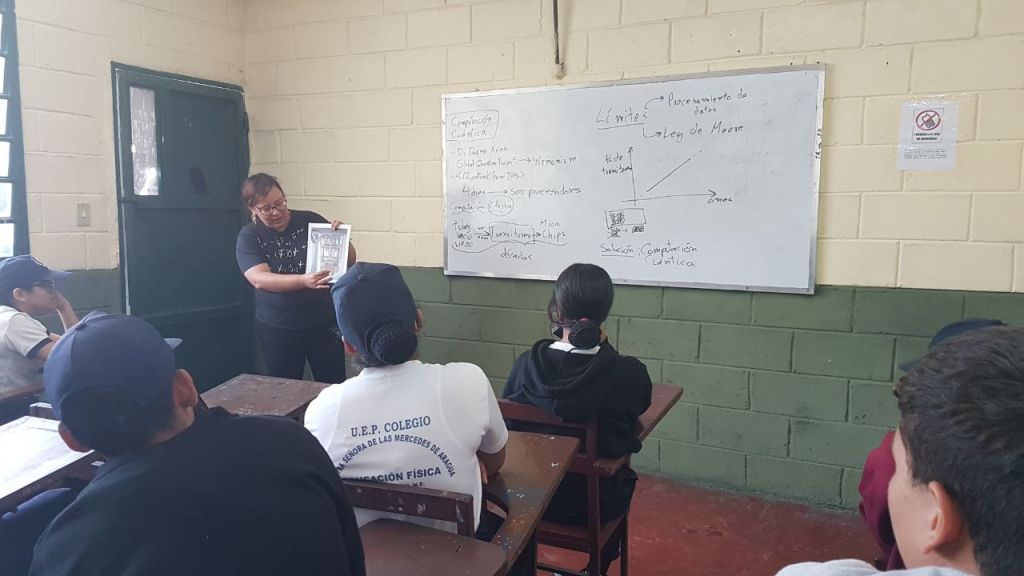
The school lacked certain teaching materials, such as a video projector, but provided markers for the whiteboard. They also facilitated the printing of color pictures, which added an engaging visual element to the discussion of superconducting qubits.
Recommendations:
A small yet impactful lesson learned from this first talk is the potential and positive influence of a simple snack in maintaining student engagement. I recommend continuing to provide snacks after the first hour of talk to foster a comfortable and receptive atmosphere during the question session.
Conclusion:
In the first talk, the <Quantum|Chamitas> project has successfully achieved its objectives of engaging young minds, fostering curiosity about quantum computing, and making complex scientific concepts accessible to non-expert audiences. This initiative holds promise for the future of science education in Venezuela, offering an innovative approach to learning.
Acknowledgments:
<Quantum|Chamitas> extend its heartfelt thanks to the individuals who played a pivotal role in making this first <Quantum|Chamitas> face-to-face activity a success:
Prof. Ana Mercedes Ocha (School Director)
Prof. Edalis Martinez Saavedra (Math Professor)
Cecilia Anis (Secretary of the Evaluation Department)
Prof. Ana Pacheco (Sub-Director)
Prof. Blanca Valderrama (Coordinator)
Also, thanks to the physician of the institution, Zulay, for serving as the first contact to organize this activity with the administrative group.
And, as usual, heartfelt gratitude to the Womanium organization for their unwavering support.
Your support and dedication were instrumental in empowering young minds with the wonders of quantum computing. #ThankYou.
 Dr. Carolina Perdomo