
These last weeks (especially this one), I have been reflecting on what it means to be a woman in science 🤔💭. I am a physicist, which is evident at this point, given the content of my portfolio 😆. Also, I am a [cis] woman. So, in honor of today’s International Women’s Day, I want to share some of these personal reflections with you.
First, your experience as a woman in science can vary greatly depending on your field and country ✅. In my case, I’m from Venezuela 🇻🇪, where, during my bachelor’s degree, I remember many girls taking courses with me throughout all semesters. However, if I push my memory further, I am confident that I was the only woman in my undergraduate Classical Field Theory course and the only woman in my cohort when I graduated. What happened to all the other girls?
Although Venezuela is one of those countries with a smaller gap between girls and boys in STEM [1] 💡, the reality remains that there are fewer and fewer girls as you advance in your academic career. And how many hold positions in academia? How many are directors of institutes? [2] This is especially true in fields like engineering or physics, where more women are in the life science branches.
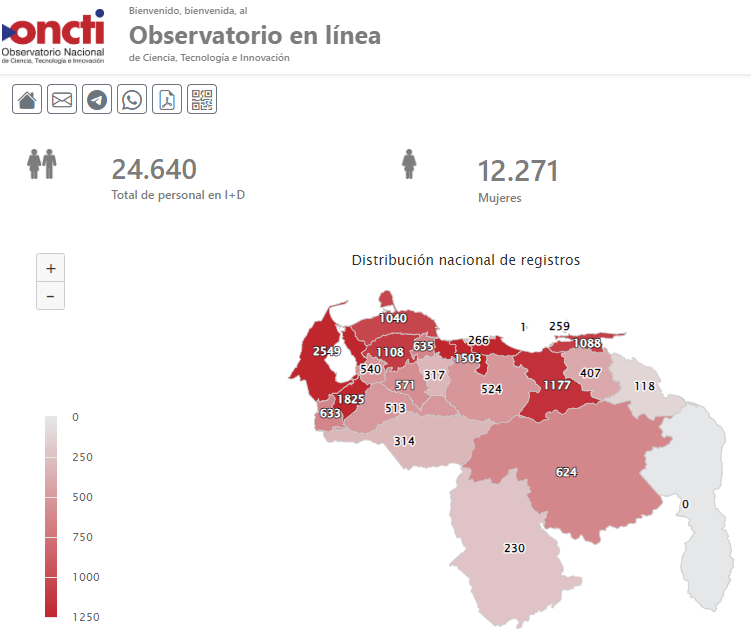
In any case, our current minister of science is a woman! We also have a couple of very successful women in science [3] 💡 (I have had the opportunity to take some classes with them). I really hope they inspire other women and girls in our country.
Now, let’s take our conversation to a more global level 🗺️. I don’t think that because there are cases of women thriving in science, we can translate that as a total success and take it as the ultimate example ⛔. That is, I don’t think a few cases of success mean absolute equality between boys and girls in science, at least.
For instance, as a physicist, I love and admire the work of Emmy Noether and Marie Curie. ❤️ I cannot hide that I get hyper-excited each time I read about Noether’s theorem. I am a giant nerd. But let’s also face reality: both faced rampant sexism in their times ⛔. And I am sure that when people hear ‘Noether,’ they don’t think about one of the most remarkable mathematicians in abstract algebra 😅.
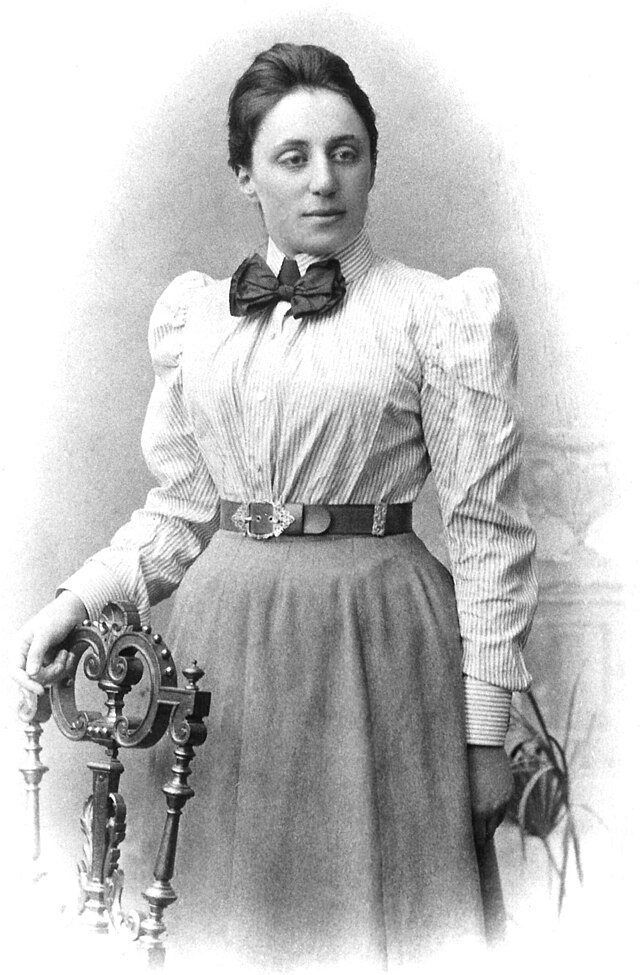
But would those cases inspire others? 🤔💭 Some of my teenage students might not feel connected to figures like Marie Curie and Emmy Noether. And I don’t say that because they may or may not know them. They are individual cases of success. We need to talk more about the impact of their work on our daily lives and how other women continue to create and advance science today ✅.
And that’s the point. Science is not just for some brilliant minds who lived 100 years ago; science is everywhere (even on the expiration date of the milk in your refrigerator 😂), and there are other more recent examples of modern minds working on it. It is more tangible and closer to us.
🧩 Do you know which example is closer to us and should more girls (and guys) talk more about? ➡️ Katie Bouman (or, to use a phrase that doesn’t speak enough about how cool she is: the girl of the black hole picture).
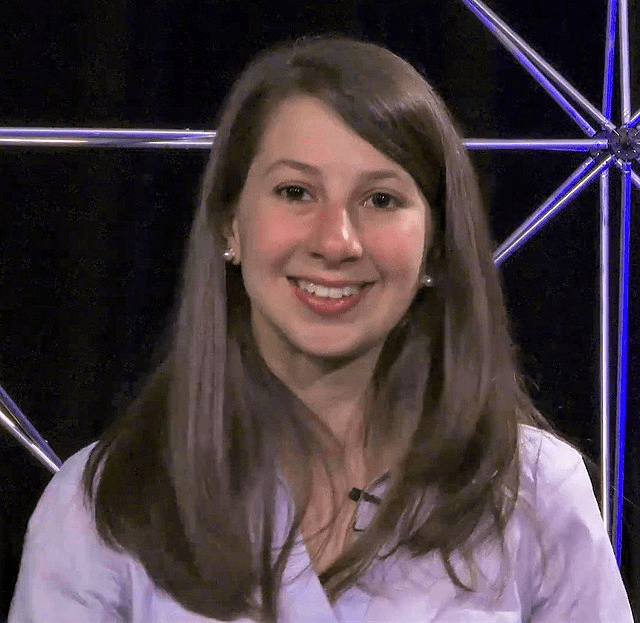
Of course, I will exclude more thoughts about being a woman from this reflection, such as how maternity leave works when conducting research or what it’s like to be a researcher with kids. But I haven’t experienced any of those, so I am not in a position to talk about them. And I don’t want to even start talking about other topics… such as sexism or harassment ⛔, because I think that deserves a whole serious and more formal post.
I want to finish with the thoughts I always share on this day. ✅ I have advanced in my career because I have dedicated myself, and people, both women and men, have supported and inspired me. Regarding men, I would mention my father, but sorry, Dad! Today, I want to talk about women 😝.
In the case of women, I must mention my cousin Yaritza. 💡 Yary is like my older sister, so I always look out for her. She went to school for bioanalysis and then completed her master’s degree at one of my country’s most famous and remarkable research institutes: the IVIC. She is incredible, thoughtful, and kind but can be assertive. She has always been such a positive example, ✅ which made me realize how important it was to go to university and follow those steps.
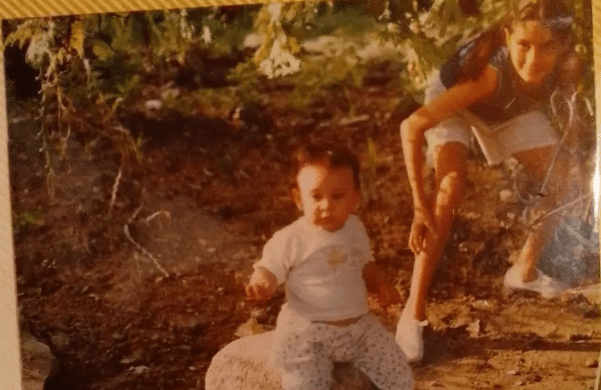
Also, Mom. 💡 Mom was the first generation in her family to attend college (even the first to earn a master’s degree). She is a physician (or simply “doctora” in my country).
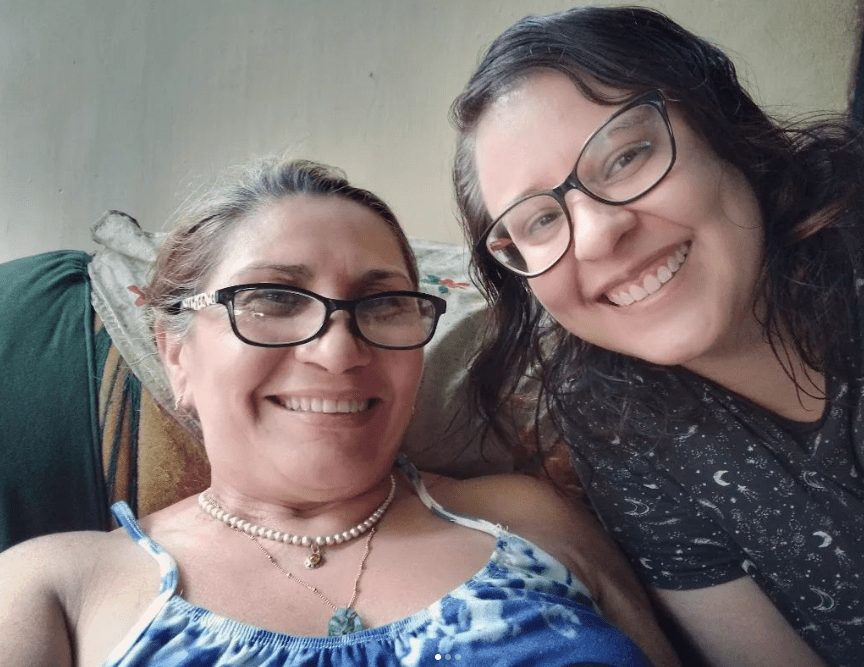
It’s interesting, but right now, as I write, I realize that having women in life sciences gave me such a positive view of the university and how to continue my studies—to never give up. That makes me think: That’s why representation matters! And representation that feels close to you, not just as an isolated case from the past.
Before finishing, I want to give an special hug and mention to all the women who were my Friends during my Ph.D ❤️. Really… if it wasn’t for you girls, I don’t think I would have arrived at the end of it:
• 🦕 Kariny (experimental physicist/condensed matter)
• 🐹 Ana (experimental particle physicist)
• 💄 Gaby (chemistry/life science)
• 🎶 Yubiry (computer science/music)
• 🌿 Sofía (biotechnology)
Also, I want to mention Prof. Dr. Brigitte Hiller, my supervisor at the University of Coimbra. Other incredible women in STEM during my Ph.D. were Fátima (fashion designer/researcher) and Pamela (engineering/innovation).
Thanks to all! 🙇🏽♀️ I cannot express enough how having such incredible women around marked a significant point in this travel.
 Dr. Carolina Perdomo