
Hello there! ☺️ I hope you’re all doing great. I managed to sneak in a few vacation days recently and headed over to Lyon to catch up with some family friends 🐙. Now that I’m back in the Centre-Val-Loire region, it’s time to get back into the swing of things. Speaking of sharing, I’ve been toying with the idea of starting an Instagram account to give you a glimpse of the charming little towns here in Centre-Val-Loire (and France in general) 🤔. It’s a bit of a bummer that some folks see France as just Paris – there’s a whole world of beauty outside the city lights! But well, we can chat about that another time.
While I was exploring Lyon, my thoughts were circling around what I should pen down next for this blog, especially regarding my experiences during the Womanium Quantum Summer Program 2023. One particular moment that really struck a chord with me was a keynote we had with Bonnie Marlow from MITRE. And yes! It’s a nugget of wisdom worth sharing ✅.
Let’s roll!
Sensing the Unseen
One of the modules that had us all intrigued during Womanium was all about Quantum Sensing. You see, there’s a lot of excitement surrounding various quantum technologies these days. Quantum computing, which I chatted about in a previous post, is stealing the spotlight, but there’s a lot more brewing in the quantum world.
💡However, if we dial down the timeline a bit, you’ll find nice people buzzing about things like quantum sensors and quantum communication networks. These technologies are grounded in the principles of quantum physics. As I said, during Womanium we had the chance to sit through some eye-opening lectures that dabbled in quantum sensing.
Let’s decode what quantum sensors are all about! 🚨 These sensors leverage quantum phenomena to measure everything from fields to forces to time itself. They come in all shapes and sizes! Just take a gander at these examples:
- Electric fields: For example, atomic electric field sensors.
- Time and frequency: For example, we have the atomic clocks.
- Inertial acceleration: Picture atomic accelerometers that can sense even the tiniest of movements.
- Acceleration due to Gravity: Wrap your head around atomic gravimeters.
- Magnetic fields: For example, superconducting magnetometers that can sense magnetic fields with an otherworldly finesse.
And if you’re the organized type, ✅ you can classify these quantum sensor champs into primary types based on what’s doing the sensing:
- Atoms: These are the stars of the show in atomic clocks, atomic interferometers, and more.
- Solid-state Defects: Like the magnetometers based on nitrogen vacancy (NV) centers in diamond.
- Superconductors: Now, we are talking about magnetometers using SQUIDs (superconducting quantum interference devices) to catch magnetic field culprits red-handed.
To complement, 💡 let’s chat about how the measurement happens in quantum sensing. Step one, we gotta prep the state of the system. Easy to say, not so easy to do. Step two, we allow the sensing elements to sense the local environment for some measurement time. For instance, if we’re talking atomic sensors, that would be allow the atomic state to evolve under the influence of the field to be sensed! Finally, in step three we roll up our sleeves and probe those sensing elements to suss out any changes in the system’s state.

What’s got me particularly wide-awake about this is how seemingly unrelated fields do this unexpected tango and end up giving birth to something completely new. And hey, if you’re hungry for more specifics, I got it for you! ➡️Some material about these sensors are all up and accessible on the Womanium channel. Also, my fellow participants did a stellar job summing up the details here and here.
Now, shifting gears a bit, what I really want to unravel today is the ingenious approach that Bonnie Marlow presented to us during her Womanium talk. She’s got this knack for breaking down complex quantum sensing setups into manageable bits. Let’s get into it, shall we?
The Dance of Technology Development: Journey from Labs to Markets
You might be thinking, 🧩 “Why do we even bother building these quantum sensors?” ➡️ Well, these sensors ride the wave of novel materials that pave the way for fresh technology. When you compare them to your run-of-the-mill traditional sensors, quantum sensors promise better performance and a serious size, weight, and power (SWaP) reduction. It’s like upgrading your trusty old bicycle to a sleek electric one – same concept, just a whole lot cooler! 😎
Quantum sensing is a sprawling landscape, packed with theoretical marvels, research, and some seriously exciting commercial potentials. 🤯 What had my neurons firing was the whole journey these technologies take, from being a mere idea in a lab to becoming a real-world, market-ready solution. It’s like watching a caterpillar morph into a butterfly, but in the scientific realm 🦋.
Imagine this: in the quantum tech world, you’ve got a smorgasbord of technologies at various stages of maturity. Think of it like a lineup ranging from the conceptual cool kids to those shiny, ready-for-action quantum sensors. 🚨 Each technology sits on a different rung of the Technology Readiness Level (TRL) ladder – from the fundamental explorations happening in academia, where we’re basically laying the groundwork, to the more industrial setting where the system is in the fully qualified, ready-to-market mode.
💡 So, academia lays the foundation, even in early stages of development. However, it’s government labs, R&D centers, startups, and companies that determine real-world viability. This involves applied research, testing sensors, and creating prototypes in relevant settings. For the complete technology integration and commercialization, the focus shifts [usually] to an industrial context.
The journey isn’t a solo endeavor. It’s like a relay race involving different players – academia, government labs, R&D centers, startups, companies, and industry. 🚨 They’re all bringing something unique to the table, shaping these technologies from wild theories to practical applications. ➡️ What you need to remember here is that successful quantum sensor R&D hinges on a harmonious symphony of collaboration between researchers, developers, and stakeholders. We need those diverse approaches to make these quantum dreams a reality.
But wait, challenges are always lurking in the R&D shadows, right? You got it. The big question is, 🧩 how do we propel quantum sensor technologies from the nurturing arms of public funds in academia to the hustle and bustle of private funds in the industry? It’s a journey akin to leveling up in a video game – tricky, but doable.
➡️ Bonnie dished out a tantalizing hypothesis in her talk: It’s all about embracing a systems engineering approach across the entire R&D pipeline. This approach turbocharges the technology development engine, making it smoother.
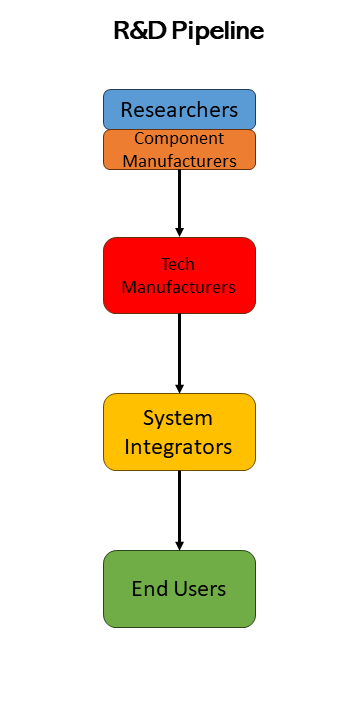
I took some minutes to create this illustrative snapshot based on Bonnie’s talk 🌀🔬 From conception to commercialization, every step contributes to shaping the future of technology.
Rising from Theory to Reality: Quantum Solutions through Systems Engineering
🧩 What does a systems engineering approach look like for Quantum Sensor R&D? ➡️ Like an interdisciplinary collaboration!
As we saunter down the typical R&D pipeline, we encounter a cast of characters that make the tech world go round – basic and applied researchers, component manufacturers, tech wizards, system integrators, and finally, the star of the show, the consumers and end users. Now, 🧩 what’s the secret sauce that holds this all together? You guessed it ➡️ a systems engineering approach, which is really just a fancy way of saying “let’s all work together harmoniously.”
So, picture this: 💡 in the grand scheme of designing, creating, managing, and operating a system, we’ve got a real-life mixtape of experts. We’re talking quantum physicists, electrical engineers, signal processing pros, system integrators, operation maestros, and the folks who’ll eventually use these innovations. It’s like a gourmet recipe – each ingredient plays a crucial role in creating the final masterpiece.
In the schema of the R&D pipelines, we’ve got some serious detective work to do. Or in other words, some top-notch system thinking questions to answer. 🧩 Let’s say we’re in the shoes of component manufacturers – we’ve got to ask ourselves: do the necessary components already exist? Or do we need to grease the wheels for adjacent technologies to join the party? Meanwhile, tech manufacturers have to ponder the nitty-gritty of performance metrics – what’s required to make this tech truly shine?
To illustrate all this, Bonnie’s got an example up her sleeve: the Rydberg atom electric field sensors. ✅ A Rydberg atom is an atom whose outermost electron has been excited to a high energy “Rydberg” state. We dug deep into the quantum software and hardware linked to these atoms during Womanium, but let’s not get lost in it now. Here’s what you really need to take away: an interdisciplinary, systems engineering approach isn’t just a fancy buzzword. It’s like the rocket fuel that propels efficient technology development, making that transition from the academia to the industry a whole lot smoother.
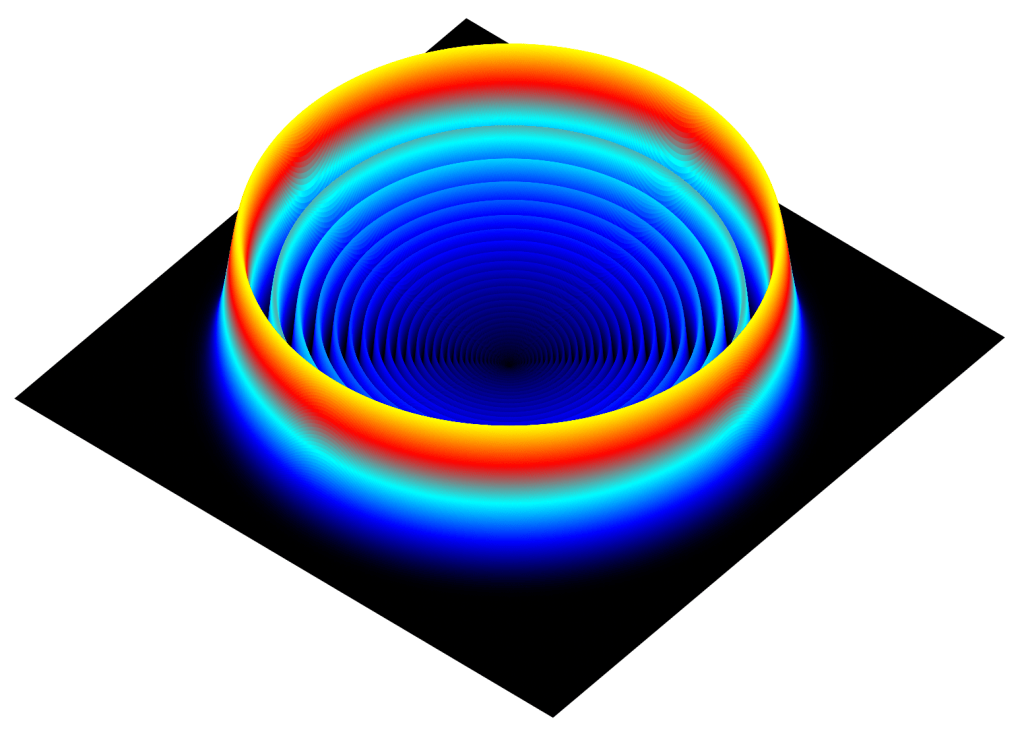
As you can see, quantum physicists don’t just live in their own bubble. They need to shake hands with those end users and collaborate across the quantum sensor R&D pipeline from the get-go. 🚨 This early connection helps spot potential hiccups in the systems integration process and ensures that research is all about crafting real-world solutions. Oh, and let’s not forget about the practical performance metrics. Recognizing what truly matters in the real world adds a hefty dose of value to the entire process.
Well, that’s a wrap on what I had in mind to share post-vacation ☺️. You know, sometimes you end up needing a vacation from your vacation – sounds a bit paradoxical, doesn’t it? 😂 But hey, a little heads-up: There’s currently a quantum computing training spree tailored for Spanish speakers by Quantum Quipu! Trust me, it’s something you’ll definitely want to check out si hablas español. Stay curious, stay quantum!

 Dr. Carolina Perdomo