
Hello there! 😃 I want to start by having a brief look at how my 2023 is shaping up so far. I spent the first half of the year creating pedagogical content for an educational website. A fantastic opportunity that also allowed me to spend time in Brazil (details in my other post) and reconnect with my family in Venezuela (🇻🇪) after a five-year absence. I spent 5 whole months of treasured family love! Of course, after such a long absence, I couldn’t help but get also a sense of the political and economic situation there 🥹, but that’s a story for another day.
During my Venezuelan adventure, I also got involved with the care of some darling morrocoyes 🐢, with the goal of eventually releasing them into the wild. Following this gratifying venezuelan period, I traveled to France (🇫🇷) to see the rest of my family .

Savoring Snacks, Thriving, and Soaking Up the Sun 🌱🐢
Now, let me tell you how quantum computing piqued my interest back! In both the 1st and final years of my Ph.D., I became more engaged in the field by attending schools and events, delving into articles, and undertaking compelling projects. But I spent the entire month of April 2023 learning it back since I want to work with it. But, as the saying goes, theory is one thing, practice is quite another🤣. So I decided I needed some hands-on experience to truly solve the puzzle in my head.
Yes, I may have all the technical knowledge and capacity (yep, I’m a doctor in theoretical particle physics!), but there’s nothing like getting down to brass tacks and being a bit more humble about it all. Quantum computing is such a rapidly evolving field that merely reading books won’t cut it🚨. I came across a post on LinkedIn – the fabulous Womanium Quantum Summer Program 2023 – and decided to give it a shot. What a fantastic decision that turned out to be!
The program has been an absolute blast and very rewarding. We’re getting a comprehensive education from true experts currently working in the field✅. They’ve been enlightening us about oracular quantum algorithms, quantum key distribution (amazing!), quantum software, quantum hardware, and quantum sensing. It’s like diving headfirst into quantum wonderland!
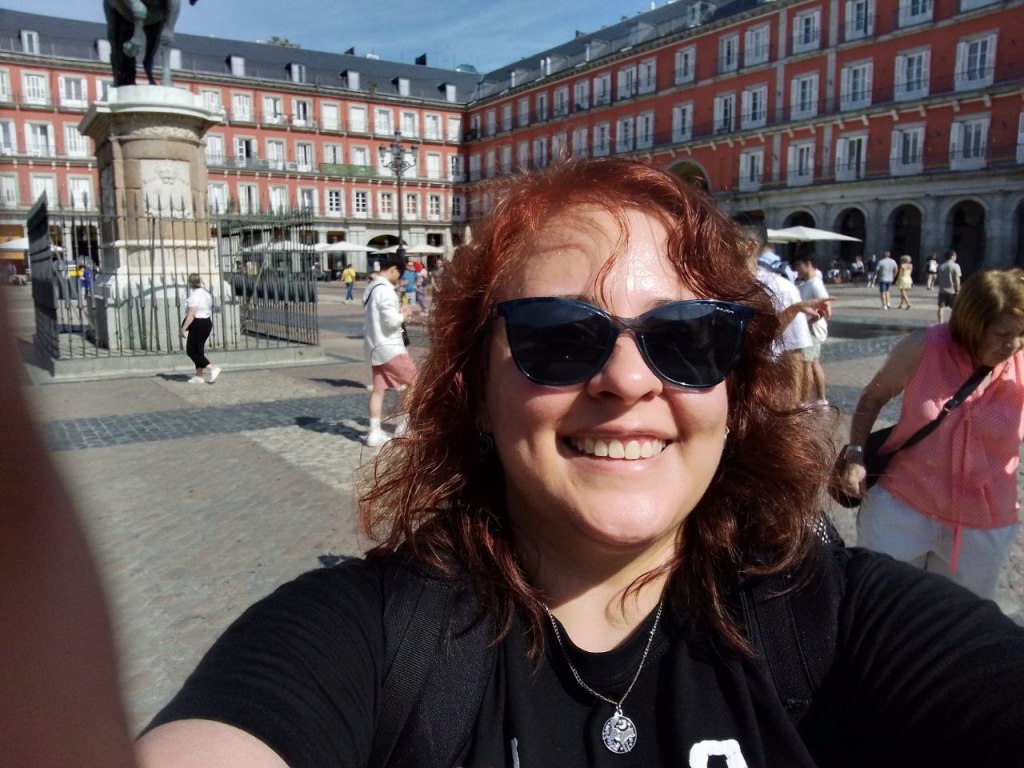
Spain, the Unexpected Stop in my Travel Adventures 🇪🇸✨
But enough about this. Let’s dive deeper into this intriguing world of quantum mechanics, and quantum computing, so we can explore some of the fascinating points that have piqued my interest during Womanium. Shall we?
Exploring the Promises of Quantum Computing
If you’re not familiar with the term, don’t be afraid, I’ll give you a rundown. In our current information age, we have some very good computers that are fast and can handle many tasks. However, there are certain problems that even these advanced computers struggle to crack, taking an eternity to process. These include tasks like modeling complex physical quantities or dealing with massive amounts of data.
Here’s the deal: as our computer transistors get tinier and tinier to boost processing power, they eventually hit a snag due to quantum phenomena. What are some creative solutions to overcome these limitations? Well, the answer lies in the use of quantum bits, or qubits, to store information instead of the traditional bits we use in classical computing.
So, 🧩 what makes qubits so special? 🤔 Hold on! Because we’re diving into the quantum world – a whole different realm compared to our classical, everyday experiences. ➡️ Qubits can exist in multiple states at once, thanks to a phenomenon called superposition. In contrast, classical bits can only be 0 or 1. But that’s not all! Qubits can also be entangled with each other, meaning their states become correlated. This property of entanglement is another exclusive perk of the quantum world.
These quantum properties are not just scientific curiosities, they’re stepping into reality. And the best part? There are various approaches to create and encode qubits in the real world! During the Womanium Quantum Summer Program, we dove into the hardware to understand how these qubits are brought to life.
But hey, even with the quantum computers we have today, we can already tackle certain simulations and optimization tasks. On the other end of the spectrum, there’s a flurry of new companies dedicated to quantum software, paving the way for groundbreaking applications.

A book that I am currently reading about physics in 15 equations: Some of these equations lack a “nice” exact solution. Quantum computing could potentially be an approach to aid in this task.
It’s like standing on the edge of a whole new frontier, filled with endless possibilities and rapid evolution. The quantum computing landscape is constantly evolving, and who knows what other marvels it holds in store for us? The journey has just begun.
Careful! Not everything is perfect
Don’t worry, I’ll keep our heads high and the vibes positive! 😁 So, our computers, both classical and quantum, aren’t exactly flawless – they do have their quirks. At the quantum level, we’re hard at work trying to deal with errors that can crop up with our qubits. But hey, no need to be afraid either, we’re up to the challenge!
In the quantum world, we must contend with a phenomenon known as quantum decoherence, in which our qubits might lose their precious “quantumness” owing to interactions with the environment. But don’t worry, scientists and engineers are developing some clever error-correcting codes and strategies to keep our qubits in sync and reduce these hitches.
Now, let’s talk about speed, which is something we all care about. While we would love that quantum computers have the ability to “fly” through some jobs like a hummingbird on a sugar high, this is not necessarily a guarantee. You see, it all relies on the task at hand and the algorithm in question (and the complexity of the problem). Classical computers can nevertheless outperform their quantum counterparts on occasion. But that doesn’t mean quantum computing is a failure! On the contrary, it’s simply a matter of matching the right person to the right position 😉.
The module I loved the most in the first week of Womanium: Quantum Key Distribution (QKD)
Let me tell you about Quantum Key Distribution (QKD), one of my personal favorite modules from the Womanium Quantum Summer Program 2023. I had never delved in this area before, but the idea of securing messages using number theory piqued my interest right away.
Here’s the deal with cryptography (the classical kind). It’s all about “encrypting” messages in a way that nosy folks can’t just breeze in and read them – it’s like a secret language! There are two main flavors to it: symmetric and non-symmetric cryptography.
Symmetric cryptography is like having a shared secret between the sender and the receiver, and they both use the same “key” to lock and unlock their messages. This method has been around for ages – we’re talking ancient times, like the Caeser Cipher back in 100 BC. But, the thing is, even though it can be really tricky to crack, it’s not completely foolproof. There’s always a tiny chance someone might sneak in and spoil the party.

Now, non-symmetric cryptography is a bit more elaborate. We use two keys here – a public one to lock up the message and a private one to unlock it. So, even if someone intercepts the message while it’s being sent, they can’t do squat without the private key.
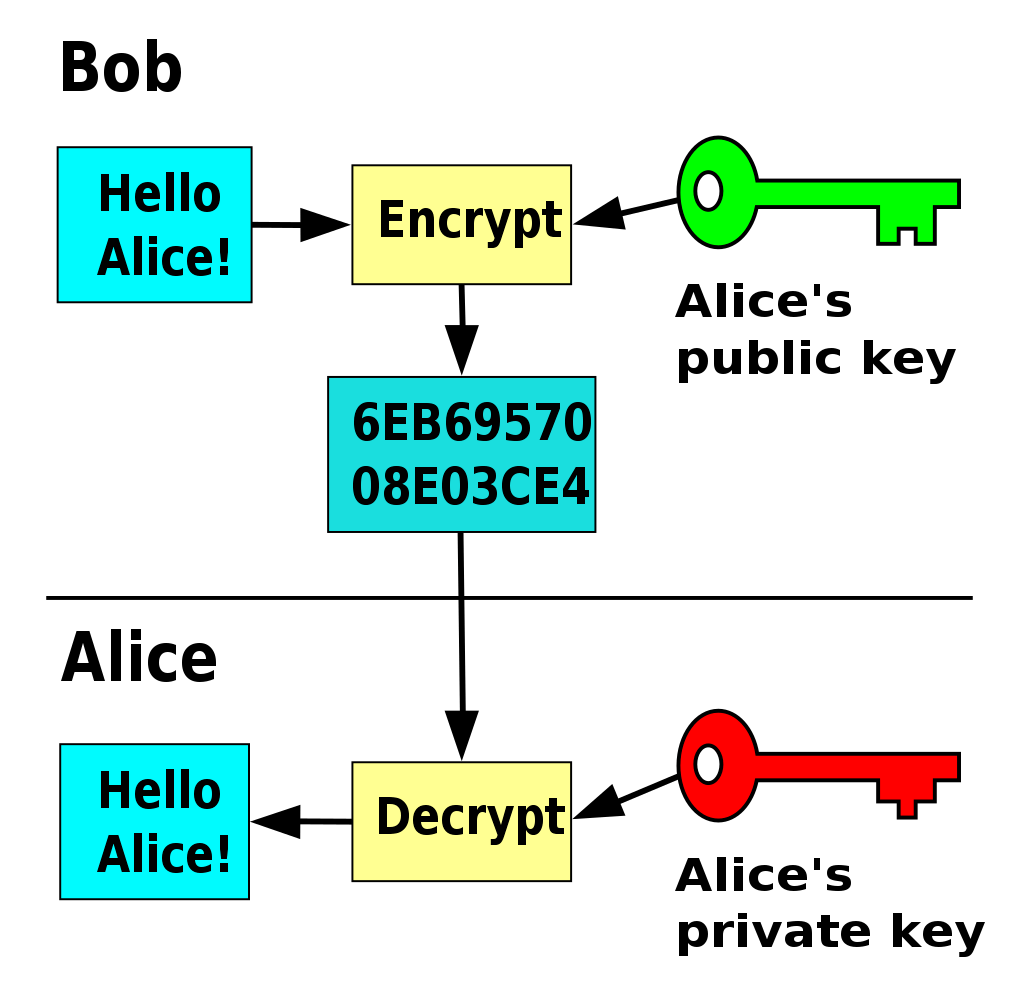
One example of this is the RSA encryption protocol, where we use a big, fat number. Let’s call this number “n,” which is the result of multiplying two other numbers, A and B. So, n is the public key, and the product of AxB is the private key. Now, figuring out what A and B are from just n is like trying to find a needle in a haystack, especially when n is humongous!
💡 But hold on tight, here comes the quantum twist! Some quantum algorithms, like the famous Shor’s algorithm, have the potential to shake up these computer protocols. So, to stay one step ahead, the bright minds propose using QKD. Now, QKD keeps things classical – the keys, the encryption, all of it – but here’s the kicker: the distribution channel is purely quantum! It’s like giving our messages a special route.
By using these quantum channels, we tap into some cool features, like the no-cloning theorem. We can even harness entanglement and other quantum quirks to keep our secrets safe and sound. It’s like a James Bond movie, but with quantum mechanics and secret codes that even Q would be impressed with 🤣.
A bit more about QKD
Before concluding, I’d like to share a few more paragraphs about the insights I gained from this module. If you’re in a hurry, feel free to skip ahead to the end.
💡 Picture this: in the quantum world, you can’t just whip out a fancy cloning machine and make perfect copies of quantum states that you don’t know. It’s like trying to photocopy a top-secret document without having the original – impossible! So, if someone doesn’t know the original state, they’re out of luck when it comes to cloning it. That is what the no-cloning theorem is about.
But now, here’s where things get even juicier. ✅ To measure these quantum states, we’ve got to prepare the base in which they’re sent. But if the preparation base doesn’t match the measurement base… uh-oh, we’ve got a mismatch and an error is introduced in the process. Sneaky, right?
These properties come in handy when it comes to catching spies! 🕵️ Let me tell you about the BB84 security protocol. Let’s say Alice wants to send a message to Bob through our trusty quantum channel. ⛔ Now, lurking in the shadows, we’ve got a sneaky spy named Eve. But guess what? Eve can’t clone the states without leaving her mark, thanks to the no-cloning theorem. So, she has to resort to measuring the states, which causes them to collapse and introduces errors.
Here’s the kicker – these errors act like alarm bells ⏰, signaling that there’s a sly spy trying to mess with the channel! It’s like catching a squirrel sneaking into your backyard and leaving behind a trail of nuts. Once we detect those pesky errors, we’ve got a whole bag of tricks up our sleeves to handle the situation.
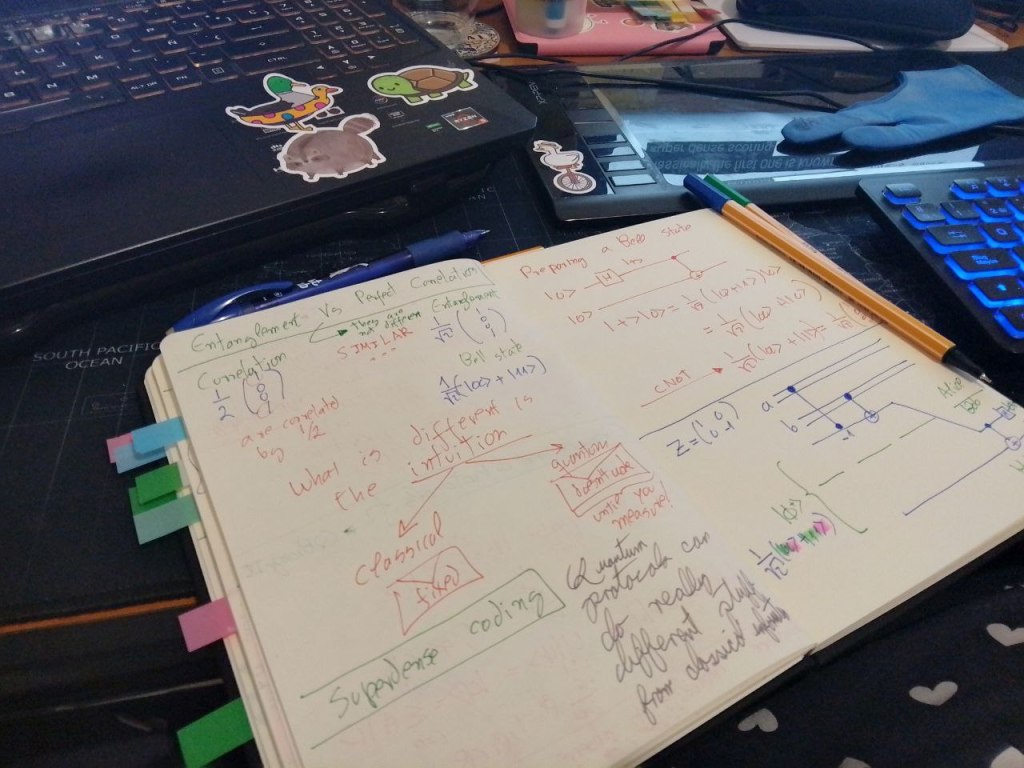
My Notes, My Journey 📝✨
❤️ So, there you have it, a sneak peek into the world of quantum intrigue and espionage. During the Womanium Quantum program, we delved deep into these fascinating approaches. We learned how to reconcile the information, when to abort protocols, and how to harness the magical property of qubit entanglement to cook up other ingenious protocols.
A Promise of More Adventures to Come
Well, I thought I’d share a bit about what I’ve learned so far. Don’t worry, I’ll try my best to keep it understandable and fun – and who knows, I might just sneak in some juicy vacation stories too (like heading to Lyon to celebrate my birthday with the most beautiful dodo of my heart – can’t wait!).
Embracing the beauty of France 🌿🇫🇷: Beyond Paris, I discover serenity and tiny surprises.
But let me tell you also, Womanium was no joke – it was a complete, all-out program. We went hardcore into the quantum. Take the Quantum Key Distribution (QKD) part, for example. It was like a whirlwind of classes, notebooks with tiny exercises, and even a dash of quices. But you know what? It’s all worth it, because that’s how you truly learn and put those newfound skills into practice 💪.
You see, if we don’t push ourselves a bit, we’ll never know if we’re doing things correctly or if the knowledge we receive is accurate unless we push ourselves a little. It’s similar to working out at the gym: No Pain No Gain!
Until next time (who knows when hahaha), keep exploring, keep learning! 🚀
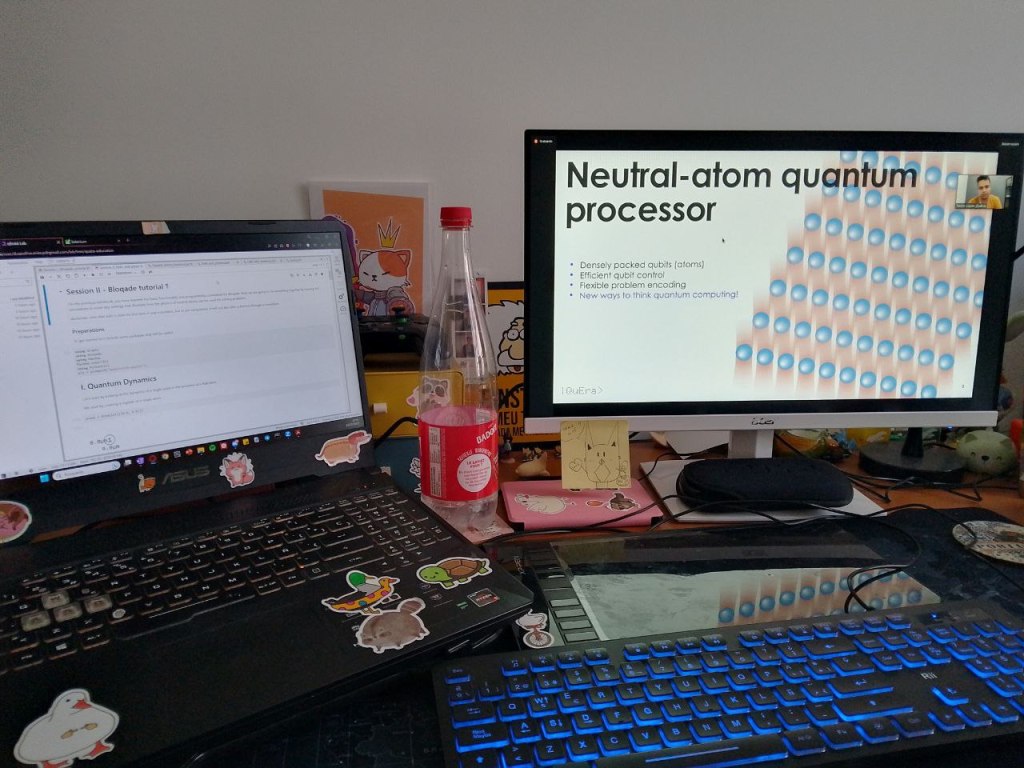
We have participated in numerous exceptional quantum computing software bootcamps. In the future, I would like to talk with you more about it.
 Dr. Carolina Perdomo